


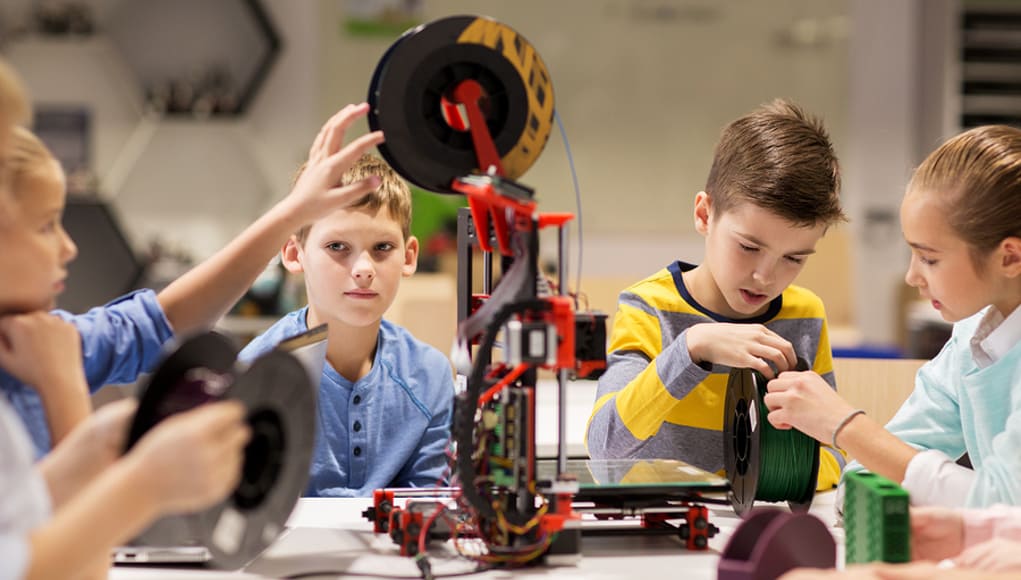
The global educational landscape stands at a critical crossroads. For generations, traditional schooling systems prioritized standardized testing, linear memorization, and uniform curriculum delivery. This factory-model framework was engineered during the industrial era to produce compliant, punctual workers capable of performing repetitive tasks. In the modern world, where automated algorithms, artificial intelligence, and sophisticated digital platforms manage routine operations, rote knowledge retention has lost its competitive value.
Modern students enter an unpredictable, rapidly evolving society where success depends on the ability to synthesize disparate ideas, adapt to unforeseen disruptions, and generate novel solutions. Creativity is no longer an optional artistic extracurricular activity. It is a fundamental cognitive skill and an essential pillar of modern pedagogy that equips learners with the agency, emotional resilience, and intellectual curiosity necessary to navigate the twenty-first century.
Redefining Creativity in Educational Frameworks
To fully integrate creative thinking into modern classrooms, educators and policymakers must move beyond the narrow definition that equates creativity solely with the fine arts. While painting, music, and theater are vital avenues for creative expression, creativity in a broad academic context represents a comprehensive mode of inquiry.
-
Divergent Problem Solving: The ability to explore multiple paths toward resolving a complex challenge rather than searching for a single predetermined answer.
-
Interdisciplinary Synthesis: Connecting concepts from seemingly unrelated domains, such as applying biological structures to architectural design or blending historical analysis with software development.
-
Iterative Experimentation: Approaching knowledge through constructive trial, error, and refinement rather than passive absorption of facts.
-
Intellectual Risk-Taking: Fostering the confidence to propose unconventional ideas, question prevailing assumptions, and accept intellectual failure as a necessary stepping stone to mastery.
Developing Higher-Order Cognitive and Critical Thinking Skills
Creativity and critical thinking are frequently positioned as opposite ends of an intellectual spectrum, with logic occupying one side and imaginative thinking occupying the other. In practical cognitive function, they are inseparable. Creative exploration provides the raw conceptual material, while critical analysis evaluates, refines, and implements those ideas.
-
Deconstruction of Complex Information: When students engage in creative open-ended assignments, they must break down vast quantities of unstructured information, identify underlying patterns, and determine which elements are relevant to their project.
-
Contextual Evaluation: Open-ended creative tasks require learners to justify their methodologies, debate alternative perspectives, and weigh the ethical, practical, and social consequences of their chosen solutions.
-
Metacognitive Development: Creative workflows force students to reflect on their internal reasoning patterns. By analyzing why a particular design, hypothesis, or narrative failed to achieve its intended outcome, learners develop deep self-awareness regarding their learning processes.
-
Retention Through Active Application: Factual knowledge applied within a creative project is retained far longer than information memorized for a multiple-choice examination. Contextual execution transforms abstract concepts into durable cognitive memories.
Nurturing Emotional Resilience and Psychological Growth
The traditional educational emphasis on rigid evaluation metrics often cultivates a deep fear of failure among students. When high-stakes standardized tests treat errors as severe penalties, learners naturally gravitate toward safe, predictable answers. Embedding creativity within daily instruction recalibrates a student’s relationship with adversity.
-
Reframing Failure as Discovery: In a creative learning environment, an initial failure is treated as an informative data point rather than a permanent assessment of intelligence. This shift promotes a growth mindset and demystifies complex subjects.
-
Strengthening Emotional Regulation: Creative pursuits offer safe outlets for emotional expression, stress relief, and identity exploration. Students learn to navigate frustration when their prototypes do not work immediately as intended.
-
Building Self-Efficacy and Autonomy: Giving students ownership over how they demonstrate mastery empowers them to take control of their education. When learners realize their personal ideas hold tangible value, their intrinsic motivation to learn increases dramatically.
-
Cultivating Empathy Through Perspective-Taking: Collaborative creative tasks, such as role-playing historical dilemmas or designing community solutions, require students to step outside their personal experiences and understand diverse perspectives.
Preparing the Workforce for an Automated and AI-Driven Future
The rise of automated technologies and machine learning has accelerated the obsolescence of routine technical and analytical skills. Software tools can retrieve facts, generate standard code, translate basic languages, and process statistical data in milliseconds. The human qualities that remain distinctly difficult to automate are curiosity, empathy, ethical discernment, and creative synthesis.
-
Agility Across Evolving Career Paths: The modern workforce rarely offers linear, lifelong career trajectories. Today’s graduates will pivot between industries, job descriptions, and technological ecosystems that do not currently exist. Creative confidence provides the foundational agility needed to learn, unlearn, and relearn throughout an adult lifetime.
-
Entrepreneurial Mindset and Opportunity Recognition: Economic independence increasingly relies on recognizing market inefficiencies and designing novel services to address them. Creative education trains individuals to spot unaddressed consumer needs rather than waiting for managerial direction.
-
Human-Centric Design and Innovation: Modern product development and software architecture prioritize user empathy and design thinking. Teams must imagine how humans interact emotionally with physical and digital environments, a process that demands intuitive creative reasoning.
-
Collaborative Synergy Across Diverse Teams: Complex modern problems, from climate mitigation to global supply chain logistics, cannot be resolved within single academic disciplines. Solutions require creative collaboration among specialists who know how to bridge disparate intellectual frameworks.
Practical Pedagogical Strategies for Creative Classrooms
Transitioning from a compliance-driven curriculum to a dynamic, creative educational model requires deliberate systemic and instructional shifts. Schools do not need to discard rigorous academic standards; rather, they must alter the vehicles through which those standards are taught and assessed.
-
Project-Based and Inquiry-Driven Learning: Replace passive lectures with complex real-world challenges where students conduct field research, build prototypes, and present their findings to authentic audiences.
-
Open-Ended Assessment Rubrics: Design evaluation metrics that reward originality, alternative problem-solving paths, and thorough self-reflection alongside factual accuracy.
-
Integration of Arts into STEM (STEAM): Introduce artistic design, aesthetic inquiry, and narrative communication into science, technology, engineering, and mathematics courses to stimulate multidimensional thinking.
-
Flexible Learning Spaces: Design classroom environments with modular furniture, collaborative whiteboards, and maker spaces that encourage group collaboration, movement, and physical prototyping.
-
Deliberate Time for Self-Directed Exploration: Incorporate unstructured inquiry blocks where students pursue passion projects or conduct independent research into subjects outside the standard syllabus.
Frequently Asked Questions
How can teachers assess creative work without relying on purely subjective personal opinions?
Teachers evaluate creative output objectively by using structured rubrics with clear criteria focused on the process rather than personal taste. These rubrics assess the depth of background research, the logical coherence of the solution, the evidence of iterative revisions, the application of core conceptual principles, and the student’s ability to articulate their problem-solving rationale.
Does emphasizing creativity in school reduce time spent mastering foundational basics like reading and math?
No. Creative pedagogy does not replace foundational skills; it enhances how they are applied and internalized. When literacy, numeracy, and scientific concepts are integrated into creative design challenges or collaborative simulations, students understand the practical relevance of these tools and develop a stronger mastery of fundamental mechanics.
How does a creative curriculum accommodate neurodivergent learners?
Traditional lecture-and-exam formats often disadvantage neurodivergent students, including those with attention variations, dyslexia, or autism spectrum traits. Creative classrooms provide multimodal ways to absorb and demonstrate understanding through visual mapping, physical prototyping, oral presentations, or interactive digital media, allowing diverse minds to thrive.
What role does educational technology play in supporting student creativity?
When used effectively, technology serves as an expansive creative toolkit rather than a passive consumption screen. Digital audio workstations, graphic design software, three-dimensional modeling engines, and code editors allow students to experiment with sophisticated production tools that were previously inaccessible to school-aged learners.
How can parents foster creative thinking at home without specialized educational materials?
Parents cultivate creativity by encouraging open-ended play, asking curiosity-driven questions that lack simple yes-or-no answers, and allowing children space to experience unstructured boredom. Encouraging hobbies that require manual building, storytelling, cooking, or artistic exploration without rigid instructions develops a lifelong habit of creative self-direction.
Can creative thinking skills be learned by students who do not feel naturally artistic?
Yes. Creativity is a cognitive muscle that strengthens through practice, not an exclusive genetic trait reserved for artists. By regularly practicing brainstorming techniques, analyzing problems from multiple perspectives, deconstructing everyday objects, and engaging in collaborative problem solving, any student can build strong creative capabilities.