


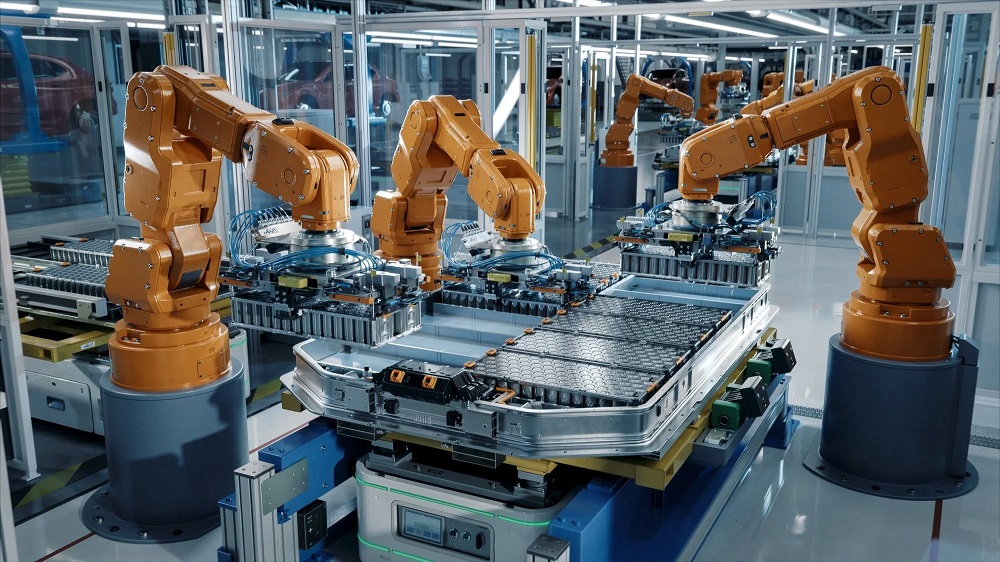
The manufacturing sector is undergoing one of the most significant structural transformations in modern industrial history. For decades, automated machinery served as stationary, single-task equipment bolted to factory floors, cordoned off by safety cages to protect human workers. Today, rapid developments in artificial intelligence, sensor precision, machine vision, and materials science are dismantling those barriers. Industrial robotics is shifting from rigid, repetitive execution to adaptive, intelligent collaboration.
As global supply chains face persistent labor shortages, fluctuating consumer demand, and demands for greater customization, robotics has emerged as the cornerstone of next-generation industrial production. Understanding how these technologies are integrating into modern facilities reveals a future where efficiency, worker safety, and operational resilience reach unprecedented levels.
The Evolution from Heavy Automation to Intelligent Cobots
Traditional industrial robots were designed primarily for brute force and speed. They excelled at lifting vehicle chassis, welding structural steel, and stamping heavy sheet metal in high-volume, low-mix production environments. While powerful, these systems lacked flexibility and required extensive reprogramming whenever a product design changed.
The modern manufacturing landscape relies increasingly on collaborative robots, commonly referred to as cobots. Designed with lightweight materials, rounded edges, and integrated force-torque sensors, cobots operate safely alongside human workers without physical cages.
-
Integrated Force Feedback: Advanced tactile sensors allow cobots to detect unintended contact instantly, coming to a complete stop before causing injury.
-
Rapid Deployment and Reprogramming: Modern cobots feature intuitive user interfaces and lead-through programming, allowing shop-floor technicians to guide the robotic arm by hand to record new movement pathways.
-
Flexible Footprints: Because cobots are compact and versatile, manufacturers can relocate them between workstations throughout a single shift, adapting production lines to immediate needs.
Artificial Intelligence and Machine Vision Integration
The convergence of robotics with advanced artificial intelligence and high-resolution computer vision marks the shift from automated machinery to autonomous systems. Early automated tools required parts to arrive in exact positions on conveyer belts. If a part was misaligned by mere millimeters, the operation would stall.
Modern vision-guided robots rely on multi-spectral cameras, spatial depth sensors, and deep learning algorithms to identify, inspect, and manipulate parts presented in random orientations.
-
Random Bin Picking: Vision-enabled robots can identify overlapping, disordered components inside deep storage containers, calculate the optimal grip angle, and retrieve them with zero human intervention.
-
Automated Quality Inspection: Machine vision systems inspect components down to the micrometer while the assembly process is underway, detecting cosmetic blemishes, structural micro-fractures, and dimensional variances far faster and more reliably than manual inspection teams.
-
Real-Time Path Correction: Neural network models allow robotic arms to adjust their trajectories dynamically in response to moving targets or changing environmental conditions.
Autonomous Mobile Robots in Plant Logistics
Material handling is one of the most resource-intensive aspects of facility operations. Historically, moving materials required manual forklift operators or rigid automated guided vehicles that followed magnetic strips taped to the floor. Autonomous Mobile Robots, or AMRs, have fundamentally redefined internal logistics.
Equipped with Light Detection and Ranging sensors, onboard computing, and Simultaneous Localization and Mapping algorithms, AMRs navigate dynamic factory environments without fixed floor infrastructure.
-
Dynamic Obstacle Avoidance: When a pallet, forklift, or worker blocks a primary corridor, an AMR recalculates its route instantly using secondary aisles, preventing material transport delays.
-
On-Demand Kitting: AMRs interface with enterprise resource planning systems to deliver specific parts kits to human assembly stations exactly when needed, eliminating clutter and reducing staging times.
-
Fleet Orchestration: Cloud-connected fleet management platforms coordinate hundreds of mobile units simultaneously, optimizing traffic flows, balancing battery charging cycles, and preventing shop-floor congestion.
Transforming Workforce Dynamics and Reskilling
The rapid expansion of robotic systems often raises concerns about workforce displacement. However, the practical integration of robotics in advanced manufacturing shows a structural evolution rather than outright elimination of human labor. Repetitive, physically demanding, and hazardous tasks are shifted to mechanical systems, while human roles elevate into technical oversight, process optimization, and system maintenance.
-
Reduction of Musculoskeletal Injuries: Automating heavy lifting and repetitive assembly motions reduces workplace injuries, chronic strain, and associated worker compensation liabilities.
-
The Rise of Mechatronics Technicians: Factory employment increasingly requires skills in mechatronics, PLC programming, sensor diagnostics, and predictive maintenance management.
-
Hybrid Assembly Lines: The most efficient facilities utilize human-robot teaming, combining human dexterity, judgment, and complex problem-solving with the speed, endurance, and micrometer accuracy of robotic systems.
Predictive Maintenance and Digital Twin Synergy
The integration of robotics into Industrial Internet of Things ecosystems allows machines to monitor their own mechanical health. Every joint actuator, servomotor, and pneumatic valve continuously generates operating telemetry.
By running this telemetry through digital twin environments—exact virtual models of the physical production cell—manufacturers can simulate stress points, predict component wear, and prevent unplanned downtime.
-
Thermal and Vibration Signatures: Machine learning models identify subtle anomalies in motor temperature and vibrational frequencies, signaling gear wear weeks before catastrophic mechanical failure.
-
Condition-Based Servicing: Instead of relying on static maintenance schedules that risk unnecessary downtime, components are serviced or replaced based on actual operational stress and wear.
-
Simulated Line Rebalancing: Before deploying a new product variation physically, engineers simulate robotic cycle times, kinematic paths, and potential bottlenecks within the digital twin, minimizing physical tooling downtime.
Sustainable Manufacturing Through High-Precision Automation
Robotic manufacturing plays a decisive role in corporate sustainability and resource efficiency. High-precision robotics minimizes raw material scrap during cutting, welding, and machining operations, reducing scrap volume and rework cycles.
Furthermore, automated robotic cells can operate in low-light and unheated environments, an operational model known as lights-out manufacturing. By reducing heating, ventilation, and lighting loads during overnight shifts or high-volume processing windows, facilities lower their overall energy footprints and utility expenditures.
Frequently Asked Questions
What is the average payback period for implementing collaborative robots in small to mid-sized facilities?
The payback period for standard cobot deployments typically ranges between eight and eighteen months. Because cobots do not require complex perimeter guarding or extensive facility redesign, the upfront capital expenditure remains significantly lower than traditional heavy industrial systems, allowing rapid return on investment through reduced scrap rates and increased throughput.
How do robotic grippers handle delicate or irregularly shaped organic materials?
Modern systems utilize soft robotics and adaptive gripping mechanisms made from flexible polymers, silicone elastomers, or pneumatic finger arrays. Combined with sensitive tactile feedback, these grippers can handle fragile glass vials, soft agricultural produce, or malleable wiring harnesses without causing surface or structural deformation.
Can robotics operate effectively in high-mix, low-volume manufacturing setups?
Yes. Modern software frameworks and rapid-change tool changers allow robots to switch between distinct product configurations in minutes. Hand-guiding capabilities, parametric programming, and automated vision calibration enable flexible cells to handle varying batch runs without extensive retooling downtime.
What cybersecurity considerations emerge when connecting industrial robots to plant networks?
Connecting robots to broader enterprise networks introduces attack vectors such as unauthorized firmware modifications, telemetry eavesdropping, and operational disruption. Manufacturers protect these systems by implementing zero-trust network segmentation, robust endpoint authentication, encrypted communication protocols, and regular patching protocols isolated from public internet access.
How does lights-out manufacturing impact equipment longevity?
Operating in dark, controlled environments does not degrade mechanical longevity. In fact, robots operating under consistent parameters without human-induced line stops experience steady thermal and mechanical cycles, which can reduce component wear caused by frequent acceleration spikes and unpredictable emergency stops.
What is the difference between an Automated Guided Vehicle and an Autonomous Mobile Robot?
Automated Guided Vehicles follow predefined pathways fixed by magnetic tape, wires, or optical lines on the floor, stopping entirely if an obstacle blocks their path. Autonomous Mobile Robots utilize dynamic onboard mapping, laser lidar, and machine vision to navigate freely, dynamically charting alternative routes around obstacles without relying on fixed external track infrastructure.
How are standard micro-welding and precision micro-assembly operations managed by robots?
Precision micro-assembly relies on high-resolution optical positioning systems paired with direct-drive servomotors and piezo-electric actuators. These mechanisms achieve positional repeatability measured in sub-micron tolerances, ensuring accurate placement of miniature semiconductor components and medical implants far beyond the physical capability of the human hand.